
Dental Bridges
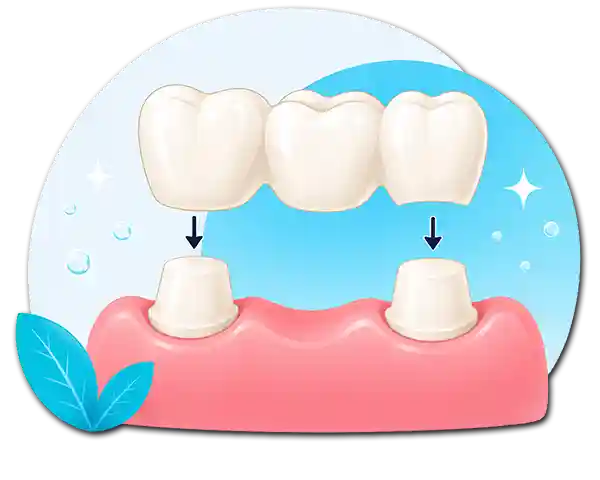
A dental bridge is a fixed restorative treatment used to replace one or more missing teeth by “bridging” the gap between healthy teeth or implants. It usually consists of:
- Abutment crowns – placed on the natural teeth or implants on either side of the gap to provide support.
- Pontic (false tooth/teeth) – the replacement tooth that fills the empty space.
How does it work?
The supporting teeth are carefully shaped to allow crowns to fit over them. These crowns are attached to the replacement tooth in the middle, creating one connected structure that is securely bonded in place.
Dental Bridges
A dental bridge is a fixed restorative treatment used to replace one or more missing teeth by “bridging” the gap between healthy teeth or implants. It usually consists of:
- Abutment crowns – placed on the natural teeth or implants on either side of the gap to provide support.
- Pontic (false tooth/teeth) – the replacement tooth that fills the empty space.
How does it work?
The supporting teeth are carefully shaped to allow crowns to fit over them. These crowns are attached to the replacement tooth in the middle, creating one connected structure that is securely bonded in place.
Zirconia Bridge
£550 per unit
The best blend of Cosmetics and Strength a Zirconia Bridge is a fixed dental restoration used to replace one or more missing teeth by bridging the gap between healthy supporting teeth or dental implants. It is made from zirconium dioxide, a strong, metal-free ceramic material that offers an excellent balance of durability and appearance.
Zirconia bridges are often recommended for patients looking for a strong, natural-looking and long-lasting alternative to traditional metal-based bridges.
How does a zirconia bridge work?
A Zirconia Bridge usually consists of:
- Supporting crowns placed over the teeth or implants on either side of the gap
- Pontic (false tooth/teeth) positioned in the space of the missing tooth
These are joined together as one solid restoration and securely fitted in place.
Benefits of zirconia bridges
✔ Strong and highly durable
✔ Metal-free for improved aesthetics
✔ Natural tooth-coloured appearance
✔ Resistant to chipping and cracking
✔ Suitable for both front and back teeth
✔ Long-lasting with proper care
Why choose zirconia?
Zirconia bridges are known for their exceptional strength, making them ideal for areas of the mouth that experience heavier biting forces. Unlike metal ceramic bridges, they do not have a dark metal core, which means there is no risk of dark margins showing at the gumline over time.
They also provide a cleaner, more natural cosmetic result while maintaining excellent function.
Things to consider
Although zirconia offers excellent aesthetics, it is slightly more opaque than E-Max ceramic, so it may not provide the same level of translucency for highly cosmetic front tooth work.
Bridge fees are charged per unit / per tooth, and the suitability of a bridge depends on the health of the supporting teeth and your overall bite.
Is a zirconia bridge right for me?
If you have missing teeth and are looking for a strong, fixed and natural-looking replacement, a zirconia bridge may be an excellent option. Your dentist will assess your oral health, bite and cosmetic goals to determine the most suitable type of bridge for your smile.

Metal Ceramic Bridge
£375 per unit
A cheaper cosmetic option. Metal Ceramic Bridges are a strong and reliable way to replace one or more missing teeth using a fixed restoration supported by neighbouring teeth or implants.
Metal Ceramic Bridges are often chosen as a more affordable alternative to Zirconia, offering a good balance between strength, function and appearance.
A metal ceramic bridge is made with a strong metal framework underneath, with a tooth-coloured porcelain layer on top to improve the cosmetic finish. This gives the bridge durability while still helping it blend with the surrounding teeth.
How does a Metal Ceramic Bridge work?
A metal ceramic bridge usually consists of:
- Supporting crowns attached to the teeth beside the gap
- Replacement tooth or teeth (pontics) joined in between
The bridge is custom-made in one piece and bonded securely into place.
Benefits of metal ceramic bridges
✔ Strong and durable for everyday chewing
✔ More affordable than Zirconia or other premium ceramic options
✔ Fixed in place and does not need to be removed
✔ Improves chewing, speech and appearance
✔ Suitable for replacing one or more missing teeth
Why choose a Metal Ceramic Bridge?
Metal Ceramic Bridges have been used successfully in dentistry for many years and remain a dependable option for restoring missing teeth. The metal framework provides excellent strength, making them suitable for areas where there is greater biting pressure.
They can also offer a good cosmetic result while being more budget-friendly than full ceramic alternatives.
Things to consider
Although metal ceramic bridges look natural, they are not as aesthetic as Zirconia bridges.
Because of the metal substructure:
- Shade matching may not be quite as natural
- Dark margins can sometimes become visible near the gumline over time
- The porcelain layer can chip, although the metal underneath remains strong
Is a metal ceramic bridge right for me?
If you are looking for a strong, reliable and cost-effective way to replace missing teeth, a metal ceramic bridge may be a suitable option. Your dentist will assess the supporting teeth, bite and cosmetic expectations to help you choose the best solution for your smile.
Metal Alloy Bridge
£200 per unit
Functional but not cosmetic. Metal Alloy Bridges are a strong and practical option for replacing one or more missing teeth using a fixed restoration supported by neighbouring teeth.

Maryland/Adhesive
£380 2 units
Not as strong as other bridges but less damaging to teeth, Maryland Bridges, also known as Adhesive Bridges, are a conservative and minimally invasive way to replace a missing tooth. Unlike traditional bridges, they do not usually require full crowns on the neighbouring teeth.
Phone
Location
Shettleston Smile Dental Surgery
948-950 Shettleston Road
Glasgow
G32 7XW
Store Hours
Monday - Friday:
9:00am - 5:00pm
Late Opening Thursday
9:00am - 7:00pm